Planning Permission & Building Regulations in Kent: 2026 Guide
Everything you need to know about planning permission and permitted development rights for your Kent property.

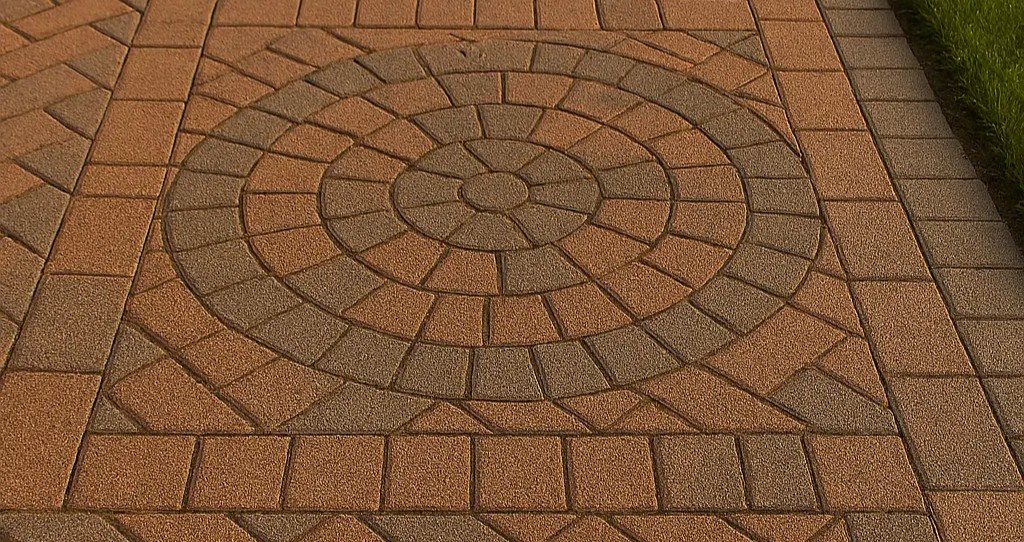
Block paving is one of the most popular driveway choices for Kent homeowners, and for good reason. It's durable, attractive, low maintenance, and adds real value to your property. But with so many block types, patterns, colours, and contractors out there, knowing where to start can feel overwhelming.
At A.P.T. Builders, we've been installing block paving driveways, patios, and pathways across Ashford, Canterbury, Maidstone, and throughout Kent for over 18 years. This complete guide covers everything you need to know, from choosing the right block type to understanding costs, installation, and long-term maintenance.
Block paving (also known as brick paving or sett paving) is a method of creating hard surfaces using individual rectangular or shaped blocks laid in a bed of sharp sand on top of a compacted sub-base. The blocks interlock to distribute load and remain stable over years of use.
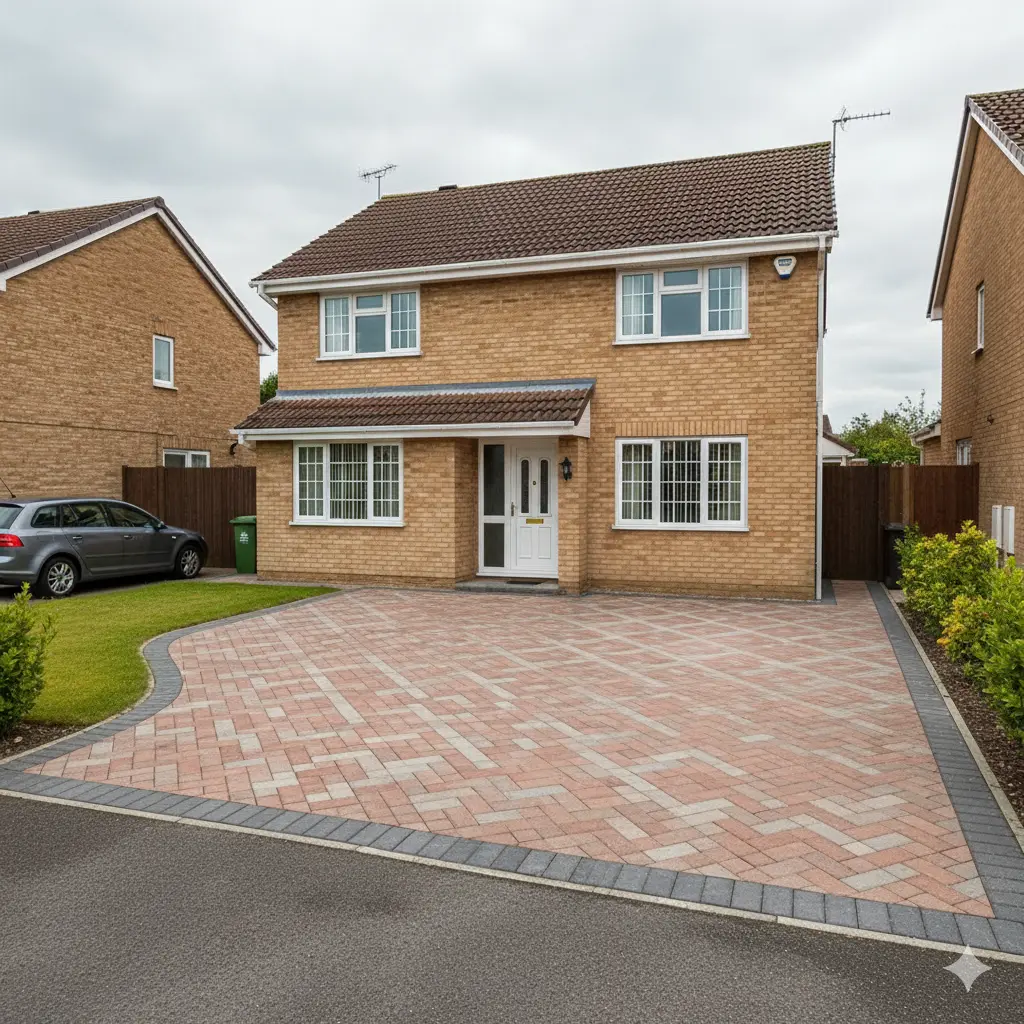
Not all block paving is the same. The material you choose affects the look, durability, cost, and maintenance requirements of your driveway. Here are the main options available to Kent homeowners.
The most popular and cost-effective choice. Modern concrete blocks come in a huge range of colours, textures, and sizes. They're hard-wearing, frost-resistant, and consistent in quality. Ideal for most residential driveways in Kent.
Best for: Standard driveways, patios, budget-conscious projects
Traditional clay bricks offer a warm, timeless appearance that suits period properties beautifully. They're naturally colour-fast (the colour won't fade over time like concrete) and extremely durable. Higher upfront cost but exceptional longevity.
Best for: Period homes, conservation areas, premium driveways
A premium option growing in popularity. Porcelain slabs are near-impervious to staining, require minimal maintenance, and look stunning. They suit contemporary homes and work brilliantly for patios and garden areas.
Best for: Patios, modern homes, low-maintenance gardens
Granite, sandstone, and limestone setts give a genuinely premium, unique appearance. Each stone is slightly different, creating a natural look that improves with age. Excellent for feature areas and period property driveways.
Best for: Luxury driveways, feature areas, listed buildings
Specially designed blocks with wider joints filled with gravel or open-graded aggregate allow rainwater to drain through the surface naturally. Meets SuDS requirements and is often required or recommended for new driveway installations.
Best for: New driveways, areas prone to flooding, environmentally conscious homeowners
Salvaged Victorian or Edwardian setts and bricks add authentic character to period properties. Availability varies but the result is unmatched for authenticity. Requires careful sourcing and experienced installation.
Best for: Period property restorations, cottage gardens, rustic schemes
The laying pattern you choose has a big impact on the final look and structural performance of your driveway. Here are the most popular patterns we install across Kent.
The most structurally strong pattern and the preferred choice for driveways that will carry vehicle weight. Blocks are laid at right angles to each other creating a tight interlocking structure that resists spreading under load. 45° herringbone is most common; 90° suits more formal schemes.
Simple and clean, blocks are offset like traditional brickwork. Best suited to paths, patios, and lightly trafficked areas. Less structural than herringbone so not typically recommended for driveways.
Pairs of blocks are laid alternately horizontally and vertically, creating a woven appearance. Works well for patios and garden areas where visual interest is more important than maximum structural performance.
Feature patterns using specially shaped or cut blocks radiating from a central point. Often used as feature panels within a larger driveway or to highlight a focal point like a central planter or water feature.
Irregular shaped pieces of natural stone or slate laid in an informal pattern. Creates a rustic, cottage-garden feel. Labour intensive to lay well but the result is unique to your property.
Combining two or more patterns, for example herringbone field with a soldier course border, creates a sophisticated, designed appearance. Popular on larger driveways and front garden schemes across Kent.
Block paving costs vary depending on the size of the area, the type of block chosen, site access, and groundwork requirements. The following gives a realistic guide to what you should expect to pay in Kent in 2026. All prices are approximate and include labour, materials, and VAT.
| Project Type | Approx. Size | Estimated Cost |
|---|---|---|
| Small driveway (1 car) | 20 to 30 m² | £2,500 to £4,500 |
| Medium driveway (2 cars) | 40 to 60 m² | £4,500 to £8,000 |
| Large driveway (3+ cars) | 70 to 100 m² | £8,000 to £14,000 |
| Patio | 20 to 40 m² | £2,000 to £5,000 |
| Garden pathway | 10 to 20 m² | £900 to £2,500 |
| Natural stone / premium upgrade | Any size | Add 30 to 60% to above |
Our advice: Always get at least three quotes and ask each contractor to specify what's included. A low quote that excludes proper sub-base preparation or drainage will cost you far more in repairs within a few years.
No obligation. We survey the site and provide a detailed, itemised quote.
Understanding the installation process helps you assess whether a contractor is doing the job properly. Shortcuts at any stage, particularly sub-base preparation, are the leading cause of block paving failures. Here's how our team at A.P.T. Builders installs block paving across Kent.
We visit your property to assess ground conditions, existing drainage, gradient, and access. We'll discuss your preferred block type, colour, and pattern before producing a detailed quote. No two projects are identical and the survey ensures we price accurately.
The existing surface (turf, old tarmac, gravel, or concrete) is removed and disposed of responsibly. We excavate to the required depth, typically 200 to 300mm for a driveway, to allow for sub-base, sand bed, and blocks. Any soft spots or poor ground is dug out and filled.
Concrete haunching is installed around the perimeter before any blocks are laid. Edge restraints are essential. Without them, blocks spread outward over time, causing the surface to break up. This step is often skipped by cheap installers.
A minimum 100mm layer of MOT Type 1 crushed limestone is laid and compacted with a vibrating plate. For driveways, 150mm is standard. This is the most critical part of the job. A weak sub-base causes blocks to sink and shift and we never compromise here.
Channel drains, gulley pots, or permeable joints are installed to manage surface water. For drives over 5m², Building Regulations require drainage to be considered. We ensure all surface water is directed to appropriate drainage, preventing flooding issues. Our groundwork and drainage team handles this expertly.
A 30–50mm layer of sharp sand (not building sand) is screeded to a precise level and gradient. This provides the final bedding for the blocks. The gradient ensures water runs towards drains rather than pooling on the surface.
Blocks are laid in the agreed pattern, cutting blocks as required to fit edges and features. We work systematically from a fixed edge outward. String lines and levels ensure the surface remains flat and true throughout.
The laid surface is compacted using a vibrating plate fitted with a rubber sole plate (to protect the blocks). Kiln-dried jointing sand is swept across the surface and compacted in, filling the joints and locking blocks together. This final compaction is what gives block paving its structural integrity.
Block paving is excellent, but it's not always the right choice for every property or budget. Here's how it compares to the main alternatives.
Tarmac: Lower cost (£30–50/m²), quick to install, smart black finish. Disadvantages: less design choice, can soften in extreme heat, harder to repair piecemeal.
Block Paving: Higher initial cost but more design flexibility, individual block repairs possible, better kerb appeal. Most homeowners prefer block paving long-term.
Resin Bound: Smooth, seamless, highly permeable. Very attractive modern finish. Higher cost (£70–120/m²) and requires professional installation to avoid cracking.
Block Paving: More repairable, wider range of traditional styles. Resin is better for ultra-modern or very large commercial areas.
Gravel: Cheapest option (£20–40/m²), naturally permeable, easy to install. Disadvantages: stones spread, needs raking, can be tracked into the house, not suitable for sloped drives.
Block Paving: Significantly higher quality finish, stable underfoot, no maintenance headache. Worth the investment for most front driveways.
Concrete: Durable and relatively cost-effective. Difficult to repair without obvious patches. Can crack over time and stains noticeably.
Block Paving: More attractive, easier to repair, better for property value. Concrete suits utility areas better than prestige driveways.
One of the great advantages of block paving is that it's low maintenance, but not zero maintenance. Follow these steps to keep your Kent driveway in excellent condition for decades.
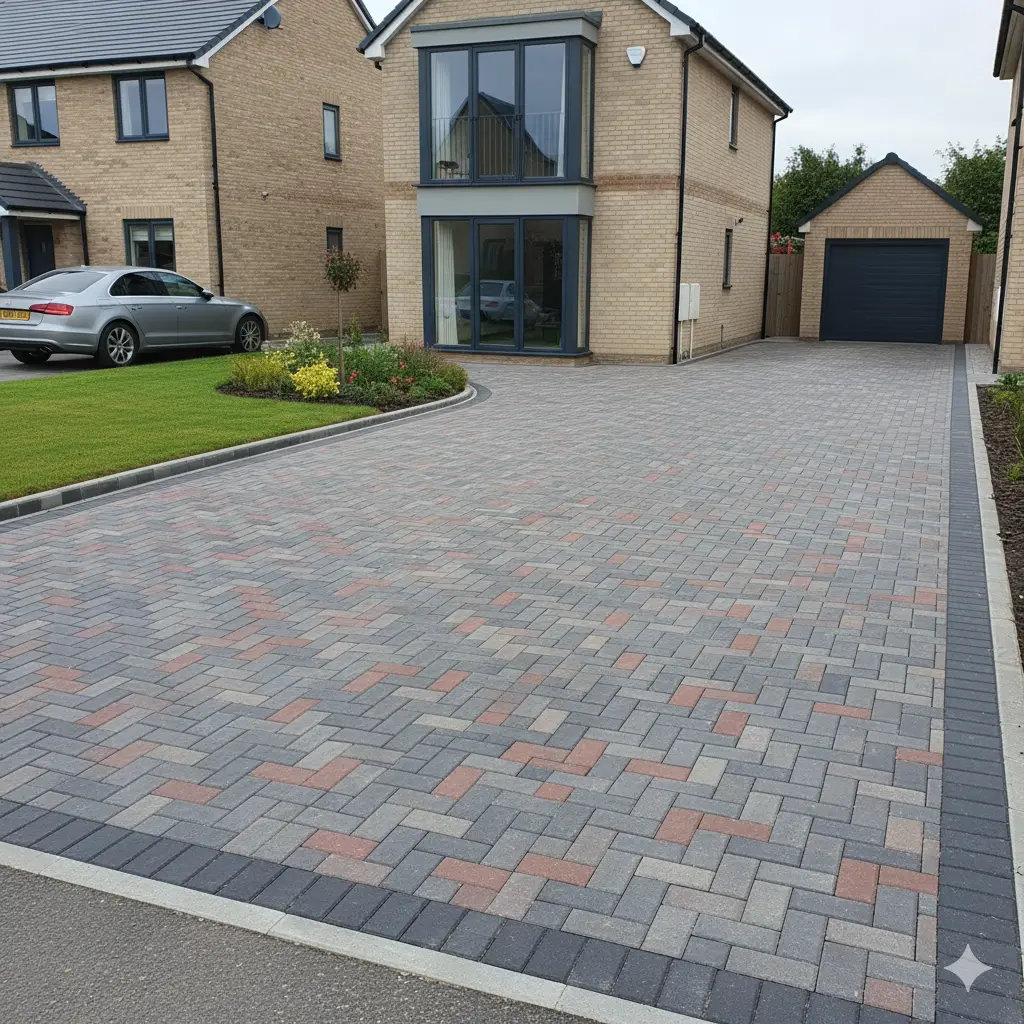
In most cases, you do not need planning permission to install a new block paving driveway in front of your house, but there are important conditions:
Block paving is a significant investment. Choosing the right contractor is crucial to getting a driveway that lasts. Here is what to look for and what to avoid.
Block paving is often part of a wider landscaping or garden improvement project. We offer a full range of complementary services across Kent.
Beautiful paved patios and raised sleeper borders to complement your new driveway.
Coordinating pathways and steps connecting different areas of your garden.
Brick and block retaining or boundary walls to frame your new paving scheme.
Full groundwork preparation and drainage solutions for any hard landscaping project.
Complete the look with new fencing, gates, and decking areas alongside your driveway.
View our full landscaping and groundworks service offering across Kent.
A professionally installed block paving driveway will last 20 to 30 years or more with routine maintenance. The blocks themselves rarely fail. Most problems are caused by inadequate sub-base preparation or poor drainage during installation.
A typical single-car driveway takes 2 to 3 days from excavation to completion. A large double driveway will take 4 to 6 days. Weather can affect timelines. Block paving should not be laid on frozen or waterlogged ground.
Yes, block paving can typically be used as soon as the jointing sand is compacted and the installation is complete. Unlike concrete or resin, there's no curing time required. We'll advise on the specific situation during installation.
Weeds grow in the joints, not through the blocks. Using kiln-dried jointing sand and applying a polymeric jointing compound significantly reduces weed growth. Sealing the surface and periodic weed treatment keeps it under control. A properly installed driveway with good jointing material requires minimal weeding.
In many cases, yes. If the sinking is localised, the affected blocks can be lifted, the sand bed or sub-base repaired, and the blocks relaid. If the sinking is widespread, it usually indicates a failed sub-base which requires a more significant overhaul. We'd survey the driveway and recommend the most cost-effective solution.
If you use permeable block paving (or drain surface water to a lawn), you don't need planning permission. If the driveway access requires a dropped kerb on a classified road, you'll need to apply to Kent County Council Highways. We can advise on the requirements for your specific address.
We can install block paving year-round in Kent, but we avoid laying during hard frosts or when the ground is frozen. Cold weather can affect the compaction of the sand bed. We're always transparent about conditions and won't compromise on quality to hit a deadline.
Yes, we cover the whole of Kent. Our block paving service covers Ashford, Canterbury, Maidstone, Folkestone & Hythe, Tunbridge Wells, Tenterden, and surrounding areas throughout the county.
With over 18 years experience installing driveways across Kent, A.P.T. Builders deliver quality block paving that lasts. Contact us for a free, no-obligation survey and detailed quote.
Everything you need to know about planning permission and permitted development rights for your Kent property.
Types, costs, planning permission and Building Regulations explained for Kent homeowners.
Causes, warning signs, emergency fixes and prevention tips for Kent roofs in winter.